Elegant Font Abby: A Modern Revival of Ancient Printed Text Aesthetics
The Typographic Heritage Behind the Letterforms
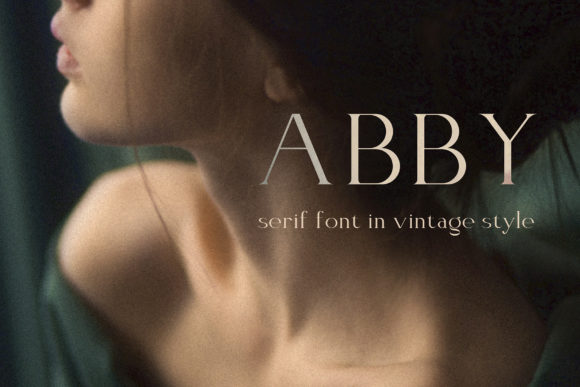
Typography carries the weight of history within each curve and serif. Elegant Font Abby draws its soul from the era of ancient printed texts, when every letter was carved with intention and cast into metal with reverence for the written word. The typeface does not merely imitate these historical forms; it reimagines them for contemporary use, preserving the warmth of handcrafted letterpress while adapting to the precision of digital workflows.
Each character in the set—from the uppercase A to the lowercase z—bears subtle irregularities that recall the slight imperfections of inked type on paper. The ascenders reach upward with deliberate grace, while descenders anchor the text with quiet stability. What makes Elegant Font Abby particularly striking is its ability to maintain legibility while pursuing aesthetic nuance. The spacing between letters has been calibrated to allow the forms to breathe, creating rhythm that guides the eye naturally across lines of text.
Designers working with this font quickly notice how the weight distribution within each glyph creates a sense of equilibrium. The thick and thin strokes are not exaggerated but rather balanced in a way that feels both refined and approachable. This equilibrium is what allows the typeface to perform equally well in large display settings and smaller body text applications, though its true brilliance emerges when given room to command attention.
Character Set and Language Support for Practical Use
The font includes a complete A-Z a-z character set, numbers, punctuation marks, and essential symbols. This coverage ensures that Elegant Font Abby functions as a reliable tool for real projects rather than a decorative novelty that fails when practical needs arise. English language support means that everything from headlines to body copy, from product descriptions to wedding invitation details, can be set without hunting for missing characters or makeshift substitutions.
Numbers in Elegant Font Abby follow the same design philosophy as the letters: they possess the same proportional elegance and visual weight. Punctuation marks are not afterthoughts but carefully considered elements that complement the surrounding text. The ampersand, for instance, is a miniature work of art in itself, with flowing lines that make it suitable as a standalone decorative element in logos or monograms.
Symbols commonly needed in branding and packaging contexts—such as the at sign, copyright mark, registered trademark, and basic mathematical operators—are present and styled to harmonize with the overall typeface personality. This completeness reduces the need to switch between fonts mid-project, preserving design consistency across all touchpoints.
Branding and Identity Design
In branding, the choice of typeface often communicates as much as the words themselves. Elegant Font Abby lends itself to identities that seek to convey sophistication, heritage, or artisanal quality. A boutique hotel, a luxury skincare line, or a specialty food producer might select this font to signal attention to detail and timeless values. The bold character of the letterforms ensures that brand names remain memorable even when scaled down for business cards or favicons.
Logos set in Elegant Font Abby benefit from the typeface's inherent contrast and distinctive shapes. Designers can experiment with letter spacing, size relationships, and color treatments to create unique lockups that feel proprietary rather than generic. The font's personality is strong enough to carry a wordmark without needing ancillary graphic elements, though it also pairs gracefully with monograms, crests, or iconography when the brief calls for additional visual richness.
Wedding Invitations and Event Stationery
The wedding industry has long prized typography that evokes romance, permanence, and celebration. Elegant Font Abby delivers these qualities through its flowing lines and stately proportions. Invitation suites can employ the font for the couple's names, ceremony details, and directional inserts, creating a cohesive system that extends from save-the-dates to thank-you notes. The typeface works beautifully when printed on textured paper stocks, where its subtle irregularities catch light and shadow to produce a dimensional effect.
Event planners and stationery designers appreciate how the font performs across different printing methods. Digital printing preserves its detail, letterpress enhances its tactile qualities, and foil stamping amplifies its contrast. The same invitation design can be translated across these techniques without losing its essential character, making Elegant Font Abby a reliable choice for clients who value consistency across their printed materials.
Packaging and Product Labels
On packaging, typography must work quickly to communicate product attributes and brand values. Elegant Font Abby helps products stand out on crowded shelves by providing a point of difference from the ubiquitous sans-serif and script fonts that dominate many categories. Wine labels, perfume boxes, chocolate wrappers, and artisanal food packaging benefit from the font's ability to suggest quality and craftsmanship at first glance.
Label designers can use the font at various sizes to create hierarchies of information. The product name set large becomes the hero element, while ingredient lists, origin details, and usage instructions set smaller remain readable due to the careful construction of each character. This scalability means that a single font can serve both the dramatic and the functional requirements of a packaging system.
Album Covers and Posters
Music and event graphics demand typography that captures mood and genre. Elegant Font Abby brings a timeless quality to album covers for classical, folk, ambient, or singer-songwriter releases. The boldness of the letterforms ensures that titles remain legible at thumbnail sizes on streaming platforms while rewarding closer inspection with typographic detail. Poster designs for concerts, gallery openings, or theatrical performances can use the font to create hierarchy and visual interest without relying on decorative extras.
Designers working in these contexts often play with the font's capabilities by adjusting tracking, layering text over photographic images, or combining the typeface with texture and color treatments. The font's strong personality provides a solid foundation for such experimentation, allowing the designer's vision to emerge through typographic expression rather than competing with it.
Technical Accessibility and File Format Support
The complete ZIP package includes OpenType (OTF), TrueType (TTF), Web Open Font Format (WOFF), and WOFF2 files. This range ensures that Elegant Font Abby can be deployed across virtually any medium without format conversion or quality loss. Print designers working in Adobe InDesign, Illustrator, or Photoshop can install the OTF files for access to the full character set and any OpenType features. Web developers and UI designers can use WOFF and WOFF2 formats for optimal performance and compatibility across browsers.
Importantly, no special software is required to begin using the font. It operates in any application that can read standard system fonts, including Microsoft Word, Apple Pages, Google Docs, and presentation software. This accessibility means that clients, collaborators, and non-design team members can work with the typeface in their own documents without technical barriers. A wedding invitation designer, for example, can share the font with a client who needs to address envelopes or prepare seating charts, maintaining typographic consistency throughout the event workflow.
For professional users, Adobe Illustrator and Adobe Photoshop offer the most robust environment for exploring the font's potential. These applications provide precise control over kerning, tracking, leading, and typographic styling that allows designers to fine-tune the appearance of Elegant Font Abby for specific contexts. The font responds well to scaling, color manipulation, and layering, making it a flexible tool in the hands of experienced creatives.
Workflow Integration and Practical Considerations
Integrating Elegant Font Abby into an existing design workflow is straightforward. After downloading the ZIP archive, users extract the files and install the preferred format into their operating system's font management utility. On macOS, this involves double-clicking the font file and selecting Install; on Windows, right-clicking the file and choosing Install accomplishes the same. Once installed, the font appears in the typeface menus of all compatible applications.
Designers who work across multiple machines or collaborate with teams should consider using cloud-based font management tools or including the font files within project asset folders. The licensing terms permit installation on multiple devices for the same user or within a single organization, facilitating consistent workflow across desktop and laptop computers.
When using Elegant Font Abby in web projects, the WOFF2 format provides the best balance of file size and rendering quality. Including the font via @font-face rules in CSS allows it to be served to site visitors without requiring them to install anything locally. The font's performance on screen is strong, with clear rendering at standard body text sizes and impressive detail at larger display sizes. Designers should test the font at various screen resolutions and on different devices to ensure optimal appearance, particularly for projects where the font carries significant branding weight.
Creative Exploration Through Letterplay
One of the most engaging aspects of working with Elegant Font Abby is the opportunity to explore letterplay—manipulating spacing, scale, orientation, and arrangement to achieve unique visual effects. The font's distinctive character shapes reward experimentation because they maintain their integrity even when pushed into unconventional layouts. A designer might set a word with extremely tight tracking to create a dense, textured block, or spread letters far apart for a breathy, luxurious feel. The font responds to both treatments without losing its essential elegance.
Uppercase and lowercase combinations offer further creative possibilities. Setting a headline entirely in uppercase capitals produces a formal, monumental quality appropriate for logos and ceremonial invitations. Mixing cases within a word or phrase creates rhythm and visual interest that draws the reader in. The lowercase letters, with their varied ascenders and descenders, produce a lively texture that feels organic and human in contrast to the stricter geometry of many contemporary fonts.
Symbols and punctuation marks within the set can be elevated to decorative roles when scaled and positioned creatively. A large ampersand between two words, a decorative dash used as a divider, or a series of numbers arranged in a grid all demonstrate how even the secondary characters in Elegant Font Abby carry design potential. This richness within the character set means that designers can create sophisticated compositions without leaving the font environment to source decorative elements elsewhere.
Observations on Minimalist Style and Readability
Minimalist design and Elegant Font Abby share a natural affinity. The font's clean lines and uncluttered letterforms align with the principles of reduction and focus that define minimalism. In a minimalist layout, the typeface can serve as the primary visual element, carrying both content and aesthetic weight without needing supporting graphics or ornamentation. White space around the text becomes an active part of the composition, allowing the letters to command attention through their own merit.
Readability in Elegant Font Abby benefits from the font's historical grounding. Readers subconsciously recognize the shapes as belonging to a tradition of printed text, which reduces cognitive load and allows the content to communicate efficiently. This is particularly valuable in contexts where the text serves both informational and decorative purposes, such as quotes displayed on walls, product packaging with storytelling elements, or editorial layouts that blend image and type.
The font performs admirably at sizes ranging from 8 points to 72 points and beyond. At smaller sizes, the well-defined shapes and generous counters maintain clarity. At larger sizes, the subtle details of each character become visible and contribute to the overall impression of craftsmanship. This range of performance makes Elegant Font Abby suitable for projects that demand both body text and display text from a single typeface, simplifying font management and ensuring visual cohesion.
The Bold Choice in Typographic Design
Selecting a typeface for a project is never merely a technical decision; it is a creative statement. Elegant Font Abby represents a bold choice precisely because it carries so much character and historical reference. In an environment where many brands default to neutral sans-serif fonts for fear of making the wrong impression, choosing a typeface with this level of personality signals confidence and intentionality. It tells the audience that thought has been invested in every aspect of the design, including the letterforms that carry the message.
For logo designers, the font provides a foundation that can stand alone or be customized. Artists creating album covers or posters can rely on its visual impact to draw viewers in before they read a single word. Business owners investing in brand identity can trust that Elegant Font Abby will communicate values of quality, tradition, and elegance without needing elaborate justification or supporting explanation.
The font made with love in every aspect of its construction—from the drawing of each character to the testing of file formats across platforms. This care is visible in the final result, where each letter carries the weight of tradition and the lightness of contemporary refinement. Whether applied to a wedding invitation, a luxury product label, a brand identity, or a piece of art, Elegant Font Abby transforms ordinary text into something worth reading, worth keeping, and worth remembering.