Anomaly Font: A Design Weapon for the Extreme
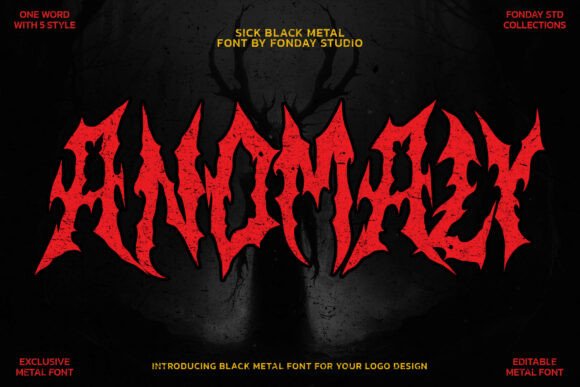
Some typefaces whisper. Anomaly Font screams. From the first glance, its jagged, scorched letterforms make one thing clear: this is not a tool for subtlety—it is a visual instrument built for chaos, volume, and raw presence. For graphic designers working in extreme music branding, horror aesthetics, or any project that demands an aggressive and unforgettable silhouette, Anomaly Font offers a level of typographic intensity that immediately commands attention. Its five destructive styles—ranging from flame-scorched to splattered and shredded—provide a rare combination of flexibility and brutality, making it a powerful addition to any creative toolkit focused on dark, loud, and uncompromising visual communication.
Why Typography Matters in Extreme Visual Design
In graphic design, every typeface carries a personality. The weight of a stroke, the sharpness of a serif, and the spacing between characters all contribute to the emotional and psychological response of the viewer. When your project lives in the world of death metal, doomcore, or underground festival branding, standard fonts simply won’t do. You need letterforms that feel physically carved, burned, or shattered. Anomaly Font delivers exactly that—a visual hierarchy built on disruption and raw energy. It doesn’t just support your design; it defines the tone from the first pixel.
Strengthening Brand Identity with a Distinctive Voice
Brand identity relies on consistency and memorability. For a metal band, a horror film, or a festival focused on extreme aesthetics, the logo is the first point of contact. Anomaly Font gives designers the ability to create a brand mark that feels genuinely dangerous and handmade in its aggression. The jagged contours and scorched edges communicate instability and power—qualities that resonate deeply with audiences seeking authenticity in the underground scene. When paired with a carefully chosen color palette of dark reds, charred blacks, and metallic grays, the font becomes the anchor of a complete visual system that extends from album artwork to merch design.
Practical Applications Across Design Disciplines
Anomaly Font is not limited to logos. Its versatility across five distinct styles opens the door to a wide range of creative projects. Whether you are designing for print or digital, the font’s aggressive silhouette maintains readability without sacrificing impact. Consider these common use cases:
- Band logos and album artwork: The most natural application. Use the flame-scorched style for a black metal EP or the splattered variant for a grindcore release.
- Festival branding and posters: Create instant hierarchy with oversized headlines that dominate the composition. The shredded style works especially well for high-contrast promotional materials.
- Merchandise and apparel: T-shirt graphics, hoodie prints, and patches benefit from letterforms that feel tactile and worn. Anomaly Font photographs well on dark backgrounds.
- Social media graphics and digital marketing: Even in thumbnail size, the font retains its edge. Use it for Instagram stories, YouTube thumbnails, and bandcamp headers.
- Editorial design and zines: For underground magazines or music publications, Anomaly Font adds a layer of visual noise that complements raw photography and distressed textures.
Enhancing User Engagement Through Visual Hierarchy
In UI and web design, readability and hierarchy are paramount. While Anomaly Font is best reserved for headlines, hero sections, and call-to-action elements, its aggressive form can be used sparingly to draw the eye and create dramatic focal points. For a dark-themed landing page for a record label or a horror-themed event, pairing Anomaly Font with clean sans-serif body text creates a tension that feels deliberate and professional. The key is balance: let the font do the heavy lifting for impact, while maintaining clarity for navigation and content readability.
Selecting and Evaluating Design Elements for Maximum Effect
When incorporating a font as visually dominant as Anomaly, designers must consider several factors to ensure the final result feels cohesive rather than chaotic. Start by evaluating the font’s compatibility with your existing brand system. Does it match the emotional tone of your project? Is the silhouette readable at the intended size? For smaller applications—such as social media icons or packaging labels—opt for the simpler styles within the family. For large-scale posters or album covers, the most extreme variants will shine.
Typography is only one part of the equation. The right color palette, texture overlays, and composition all contribute to a polished and professional presentation. With Anomaly Font, consider adding grain, noise, or halftone patterns to enhance the distressed feel. The font already carries a scorched aesthetic, so complementary textures will deepen the visual narrative without overwhelming the design.
Creative Assets That Elevate Brand Communication
Modern design workflows demand assets that are both versatile and distinctive. Anomaly Font fits into that category by offering multiple styles within a single family, giving you the freedom to switch between intensities without losing brand consistency. For packaging design—whether for a limited-edition vinyl box set or a specialty craft beer with a metal theme—the font provides instant shelf appeal. In advertising campaigns for horror films or extreme sports, it communicates urgency and edge. The font even works well in presentation decks for creative pitches, where a bold typographic choice can set the tone before a single image appears.
Quality creative assets improve both aesthetics and communication. When you choose a typeface that understands its purpose—like Anomaly Font—you reduce the friction between your design intent and the audience’s perception. The result is work that feels intentional, visceral, and impossible to ignore.
In a design landscape saturated with safe choices, Anomaly Font stands as a reminder that typography can still be dangerous. Whether you are crafting a brand identity for a black metal band or designing promotional materials for a horror convention, this razor-sharp typeface gives you the tools to make an immediate, lasting impact. For any project that dares to go dark and loud, Anomaly Font doesn’t just fill the space—it owns it.